DES 116 Buzzly Case Study
Buzzly
SUMMARY
Buzzly is a mock edible insect company that I came up with for my VisCom: Graphic Design class. I created a graphic standard that introduces the company’s logo standard, business systems, and applications to marketing products. Buzzly strives to provide protein bars containing insects as a healthy alternative. The protein-rich snack/meal reflects the company’s commitment to customer health and lowering carbon footprints.
The brand’s mission is to educate people about the benefits of accepting insects as a substitute for protein sources while also being mindful of reducing greenhouse gas emissions. For our product, we use Hermetia illucens, otherwise known as the black soldier fly, as they are high in protein.
I learned that when creating a brand’s identity, it is necessary to consider designs for various marketing methods and packaging. Key factors include color palette, typography, and logo specifications. The three components set guidelines for each business system and application. Another important thing I learned is that having consistent design aesthetics for marketing and packaging makes a brand more recognizable and professional.
DESIGN PROCESS
- Discover: Biomimicry Case Studies
- Define: Creative Brief
- Develop: Brand Inspiration and Development & Initial Sketches
- Branding: Logo Creation
- Outcomes: Graphic Standard & Final Packaging
1. DISCOVER
PACKAGING BIOMIMICRY CASE STUDIES
Cactus
Research
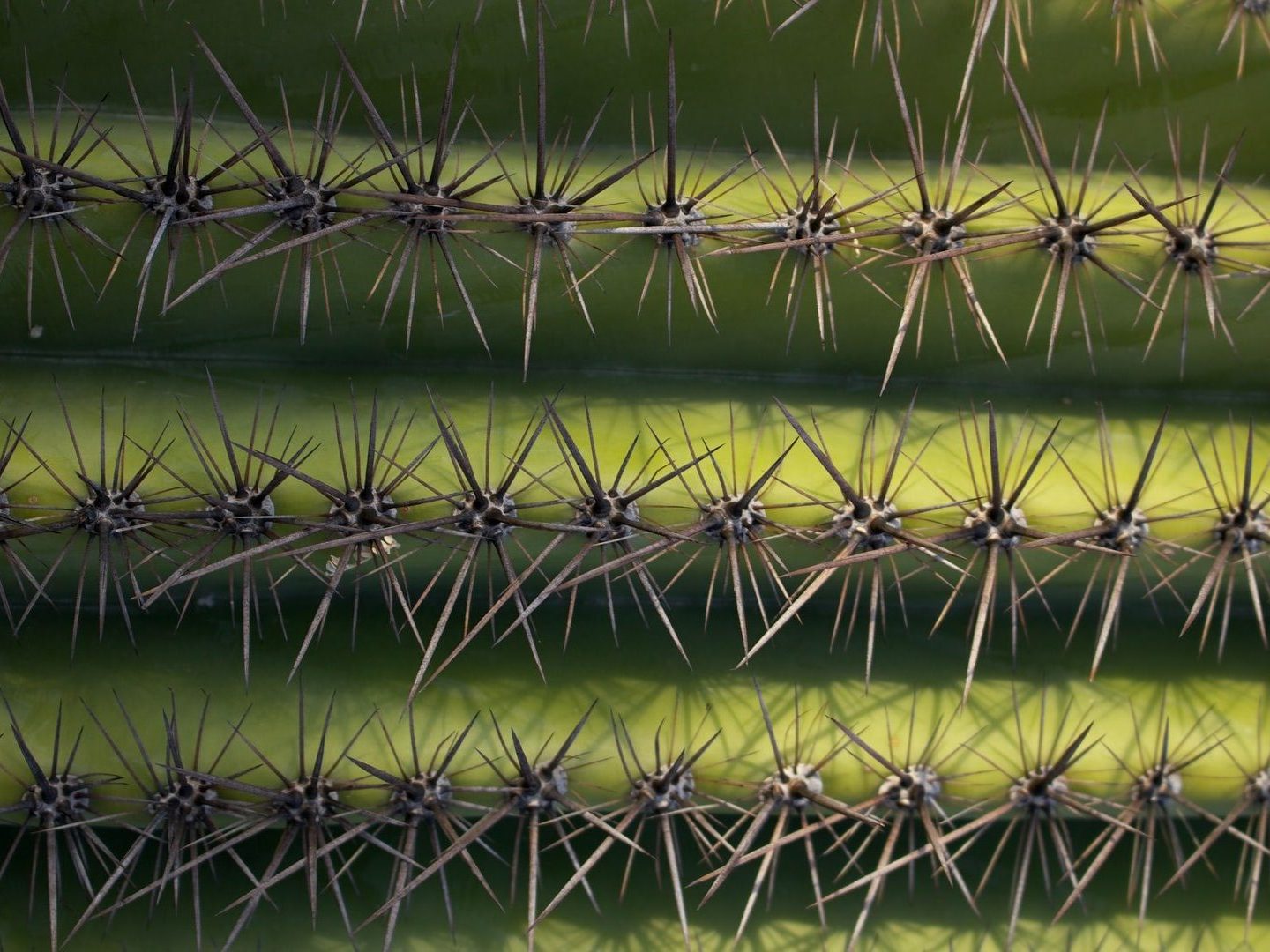
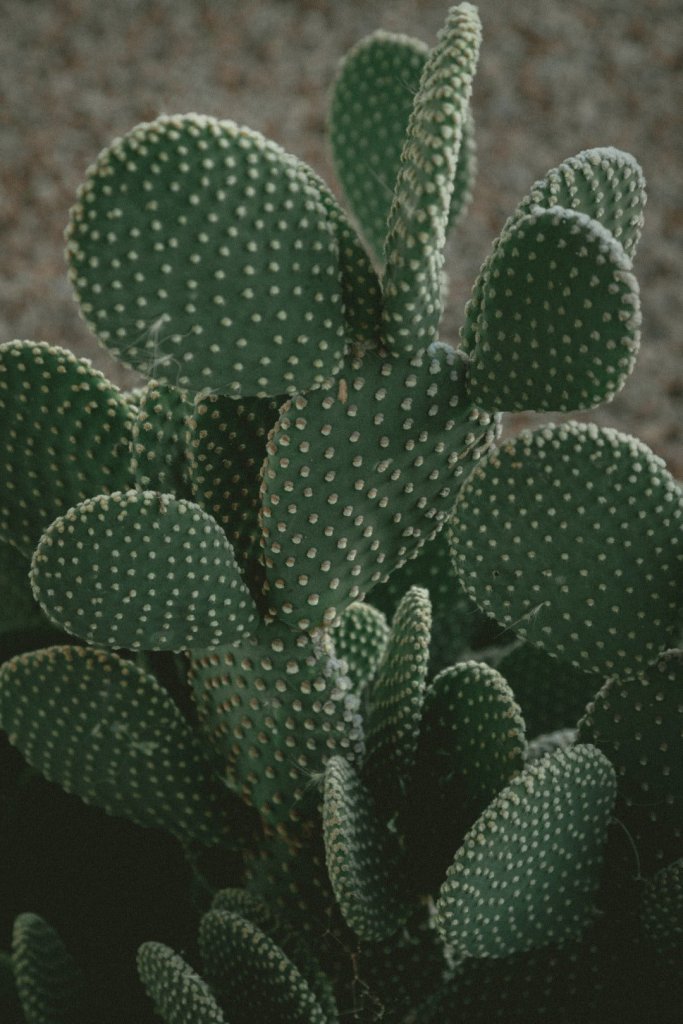
Cacti are mainly native to the Southwestern United States and Mexico and are found in dry environments such as deserts. While their reason for survival comes from requiring little water, it is also because cacti have proved to be extremely efficient at conserving water. The plant has a shallow root system that spreads out across large areas, absorbing any little water that it can get from rain.
The spines serve multiple functions such as collecting water, protecting from animals, trapping air to keep water, providing shade, and propagation. When they exist in foggy areas, their spines act as water collectors, turning the fog that lands on their spines into water that trickles down on the ground. The spines also disrupt airflow and provide shade to prevent water evaporation. Another method the cacti use to conserve water is to only open the stomata at night. Scientists have found ways to use the knowledge they have of the cacti fog collection mechanism to clean oily water and separate around 99% of oil mixed with water.
Design Ideas
Easy water collector, spiky supports to hold up something or to involve in some kind of folding.
Ladybug
Research
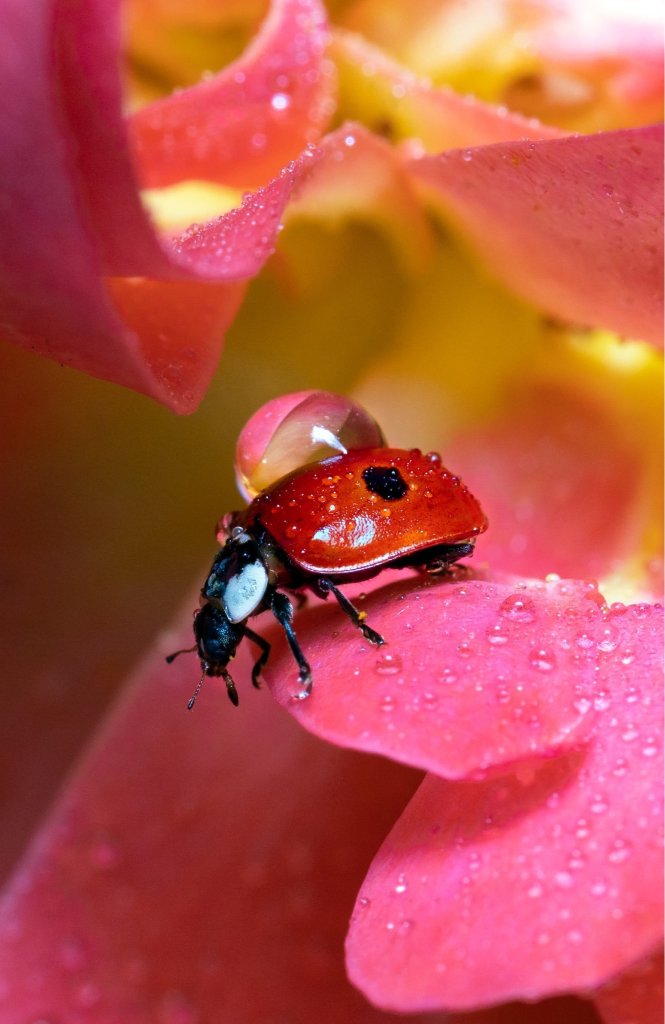
Ladybugs, otherwise known as lady beetles, are iconic for their red and black coloring. The bright colors of ladybugs are meant as warnings to the predators of their terrible taste.
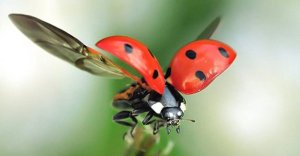
Besides their colors, however, the way they fold their wings is unique. Their wings are much longer than the cases that cover the wings but are still able to fit inside of a smaller case. Ladybugs enable the concealing of their wings not only because the strong wings are collapsible, but also because of how it folds their wings. They use a clever mechanism of gathering the wings towards the middle and thus folding them into the case. According to an article, the “up-and-down movements in the abdomen” are what enable them to execute such a complicated folding mechanism. What’s more interesting is that the wings can be stable while half unfolded because their veins use “tape springs.” Some applications that scientists have come up with include aircraft wings, space technology, and integration into umbrellas and fans.
Design Ideas
Packaging that opens up in the middle, mimicking ladybug wings.
2. DEFINE
Creative Brief
- NEEDS
The unique packaging for my edible insect product will enhance saleability by mimicking a ladybug’s folding mechanism to open up the protein bar box. My produce will also be unfolded but will have flaps on the sides mimicking a ladybug’s wing, enhancing its presence among the competitors. Another aim would be for the consumers to purchase whole boxes due to the aesthetically pleasing packaging. - BACKGROUND
The growing threat to food security has turned many countries’ attention towards edible insects as they provide nutritional benefits and reduce greenhouse gas emissions. Despite the rising attention to substituting insects as protein sources, the market struggles with its direct use of insect images or silhouettes in packaging. Hermetia illucens, otherwise known as the black soldier fly, have been gathering attention as a potential substitute for protein sources. - PROJECT OBJECTIVE
Some countries in Asia have normalized the consumption of certain insects, even considering some to be expensive delicacies. The introduction of edible insects into Western diets will be difficult due to the association of insects with dirt and disgust. The protein-rich insect in a protein bar should advocate the nutritional values, giving Western cultures a reason to adopt it into their diet. The aim is to increase brand awareness while educating the benefits of accepting insects as a substitute for protein sources. The design of the packaging will set itself apart with its playful component and clean design. - PROJECT STRATEGY
The marketing strategy for my product will mainly be through grocery stores and social media. The product will be in grocery stores, where it will stand out among other protein boxes with its unique packaging. Social media advertising would help market the product to a younger audience and possibly hop on trends. - MESSAGE
“Explore your health, live a little.”
The message that I want to get across to the audience is that the use of edible insects is not something gross. It is a healthy alternative to our protein sources, and we should be mindful of reducing greenhouse gas emissions. - AUDIENCE
Parents: Since the packaging is playful and the content is healthy, it will attract parents. The nutritional benefits could reconstruct the way parents view edible insect products.
College students who work out: Busy college students who work out are always in need of a source of protein. They are also more adventurous and love to explore healthy alternatives. The packaging could attract them as long as the price is reasonable.
3. DEVELOP
BRAND INSPIRATION & DEVELOPMENT
The name
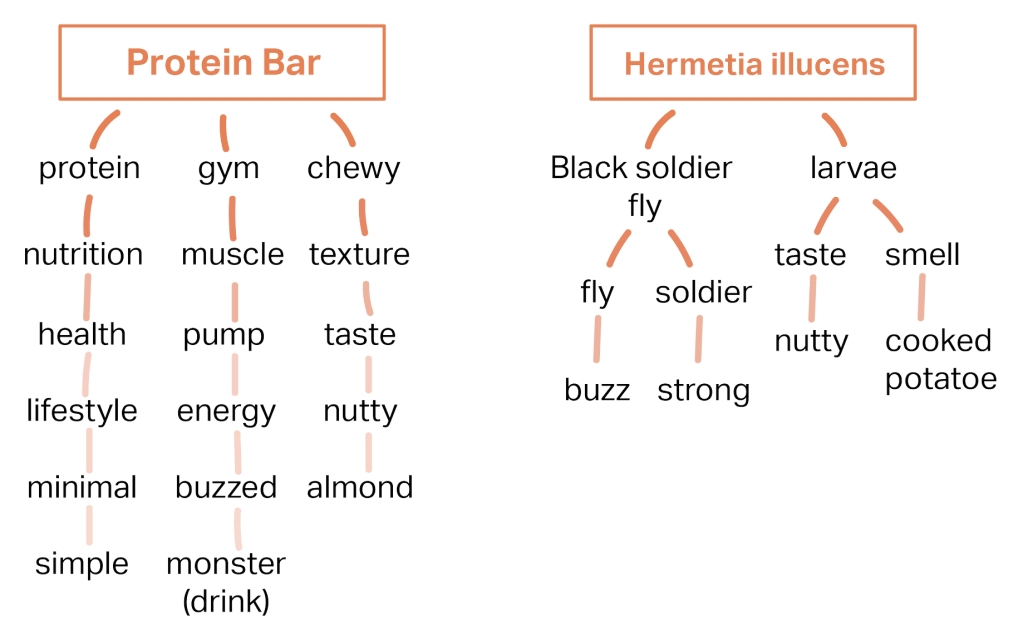
The name “Buzzly” comes from our product slogan “Simply Buzz.” To brainstorm the name, we created a word list based on the product of protein bars and the black soldier fly. Protein bars/energy bars that are protein-rich can help gym-goers maintain their feeling of enthusiasm and allow for maximum benefits despite not having time for a full meal.
BIOMIMICRY SKETCHES + PACKAGING PROTOTYPE
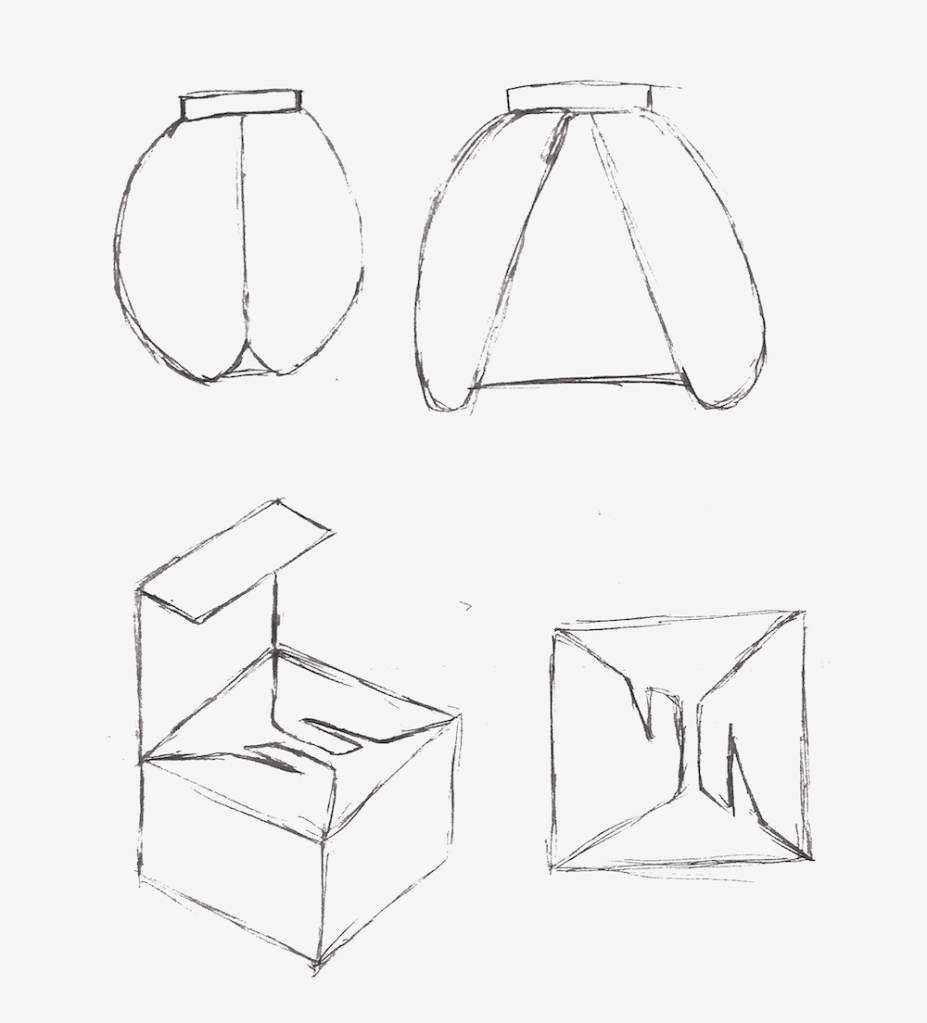
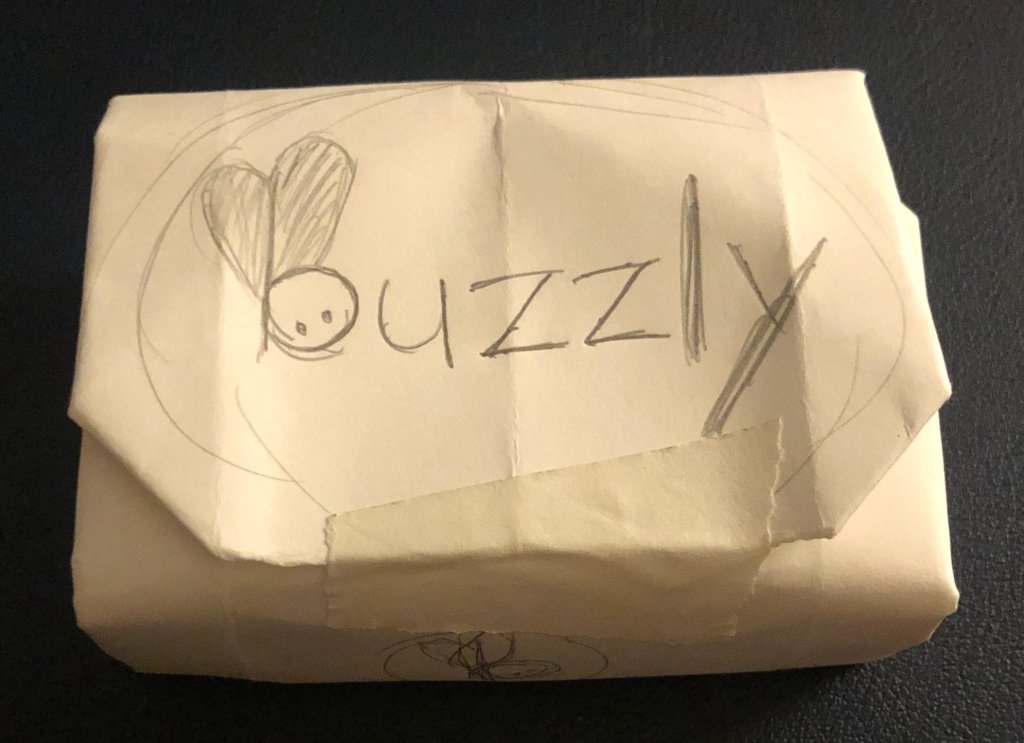
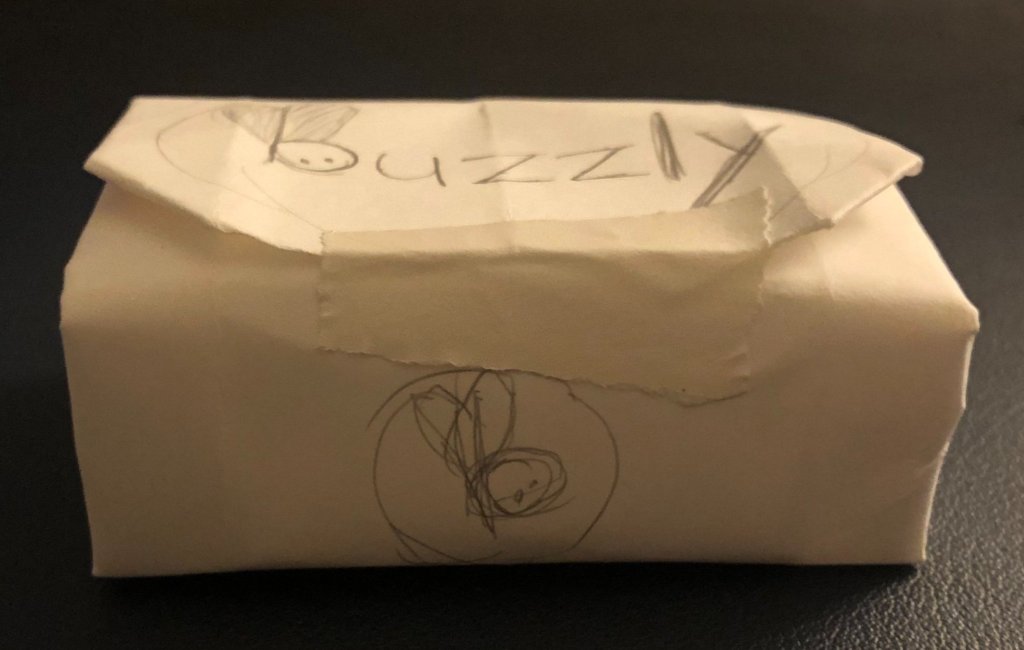
Based on our biomimicry research, we explored our options for packaging. Our first prototype involved the use of origami folding to keep the box easy to unfold and allow for more complex compositions.
LAYOUT ROUGH DRAFT
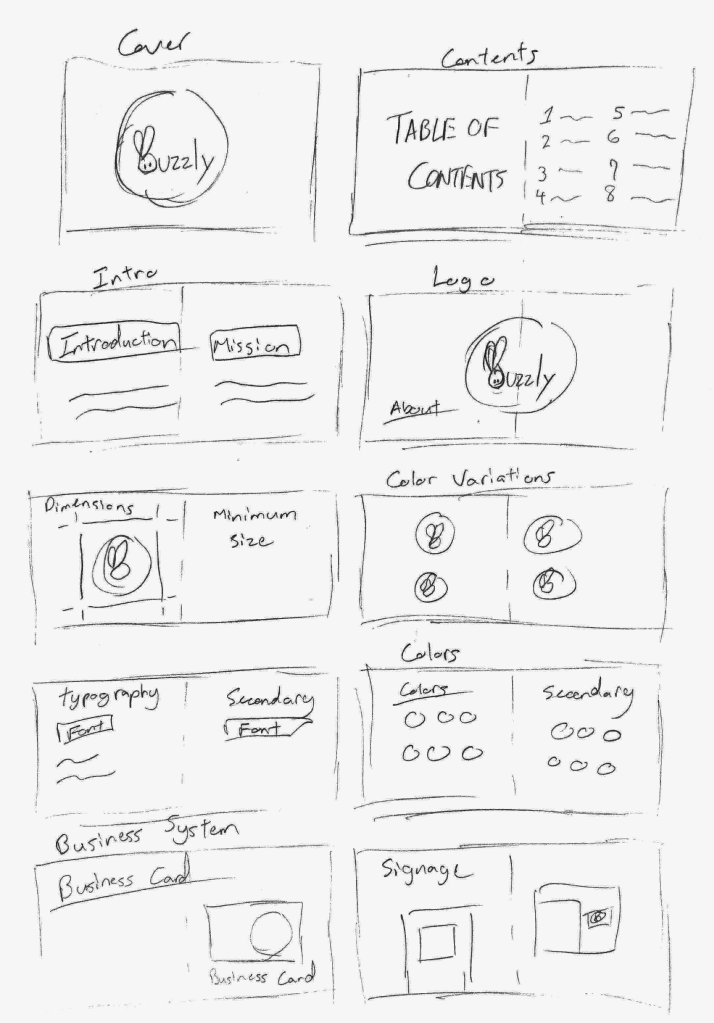
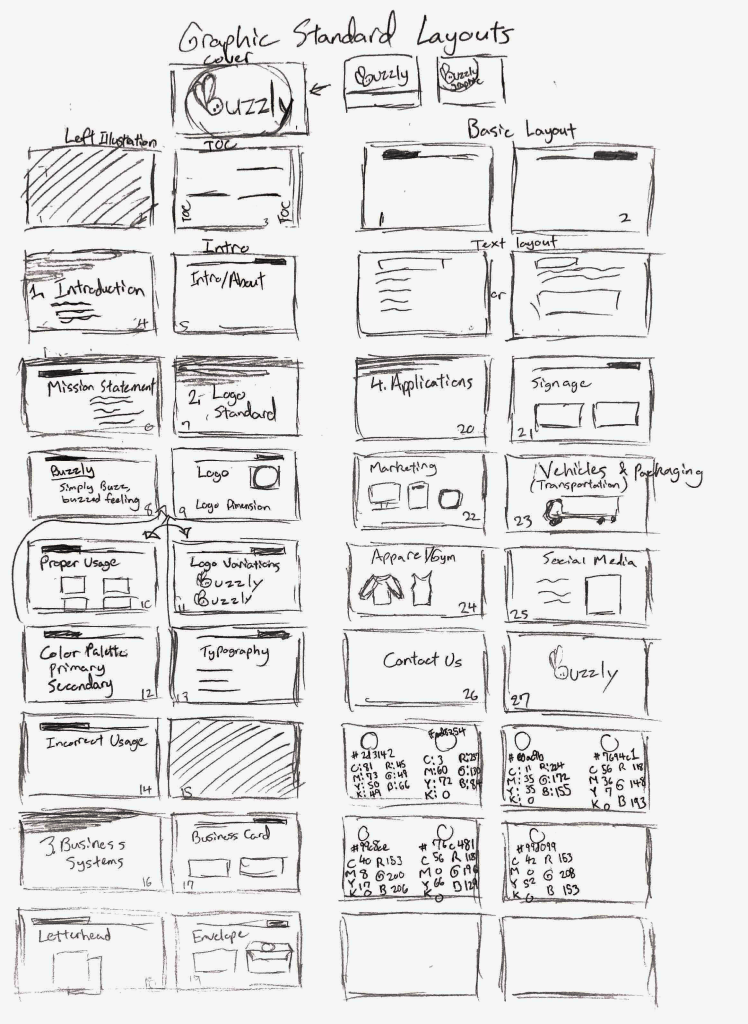
These are rough sketches of our graphic standard layout
LAYOUT FINAL DRAFT
Application Rough Sketches
These are rough sketches of our marketing applications.

4. BRANDING
LOGO CREATION PROCESS
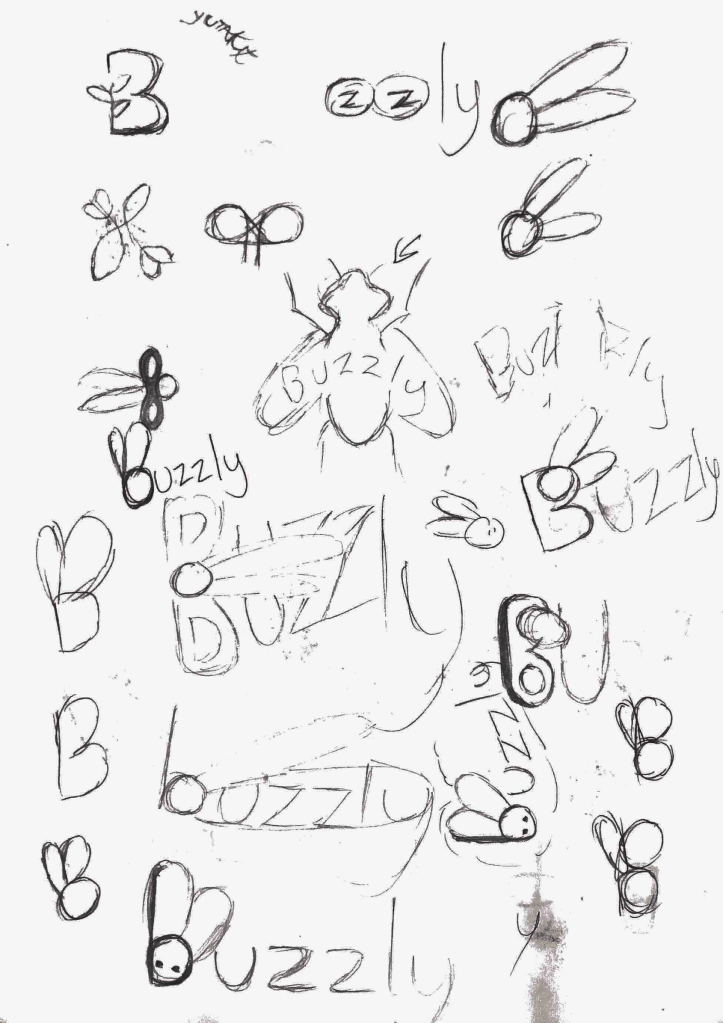
Logo Sketches
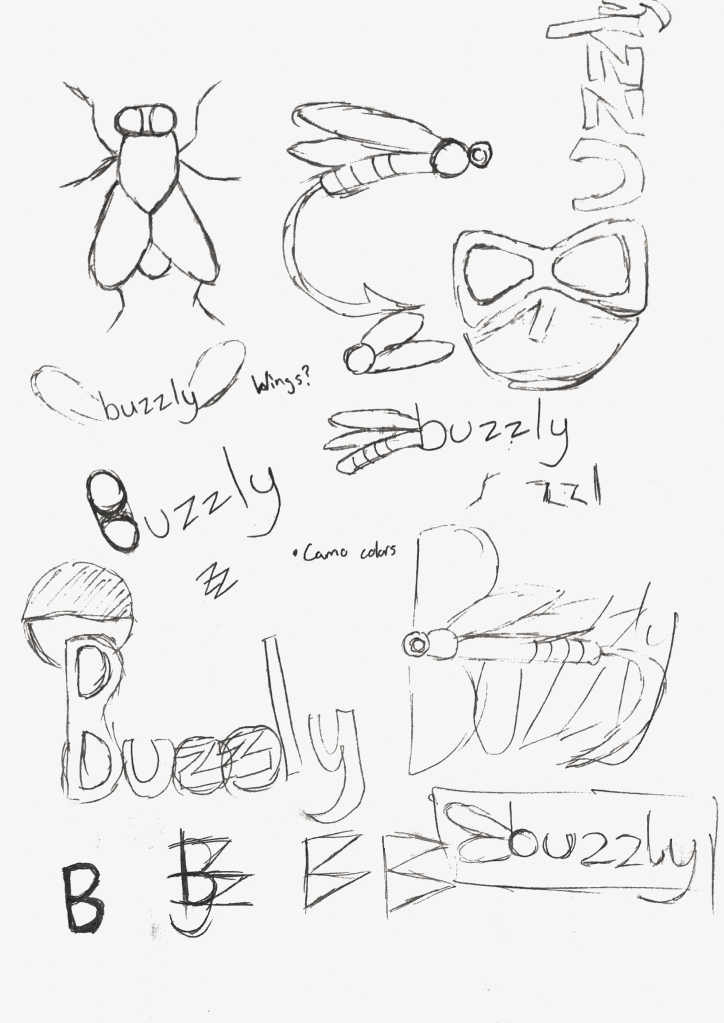
Our initial logo sketches focused on incorporating fly elements into the brand name. We explored variations of the letter “b” to imitate a fly.
Based on our experimentation, we decided to go ahead with a design that would still leave the buzzly brand name legible.
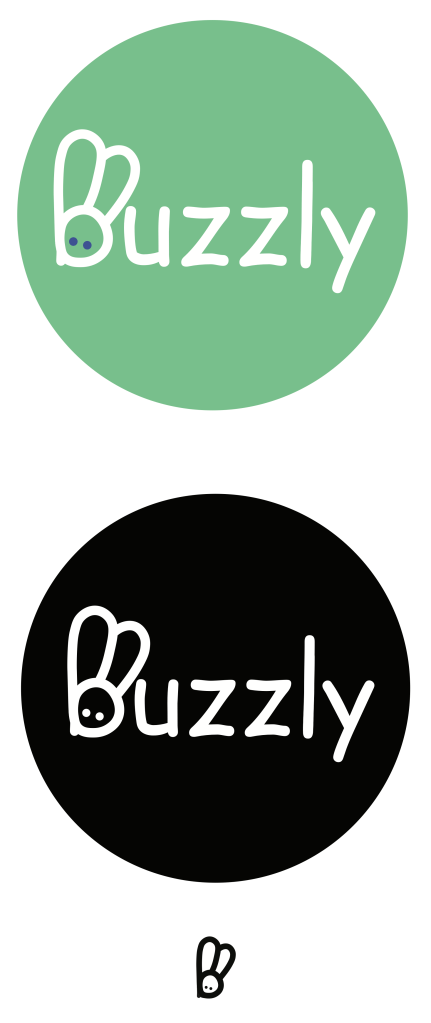
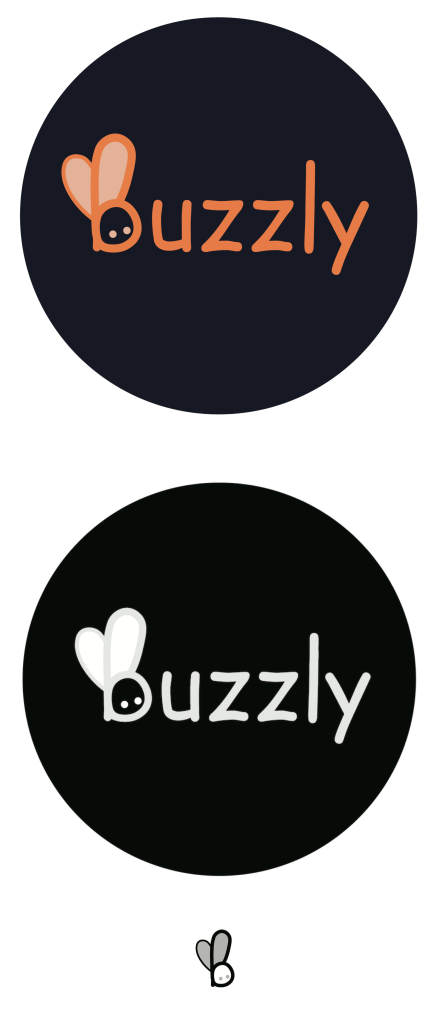
Logo Iterations
One critical critique was that the B of the Buzzly name was getting lost. Suggestions to fix this problem were to explore slight alterations and maybe play with stroke thickness for better legibility. We decided to place one of the “wings” on the left side. By doing so, it freed up some space for the name itself and thus the logo became less cramped. An additional redesign was to fill in the two wings with a lighter color of the text. This was done to emphasize the concept of the fly wings. Overall, we also decided to change the color scheme due to contrast issues that the old logo was having.
5. OUTCOMES
Graphic Standard
Final Packaging
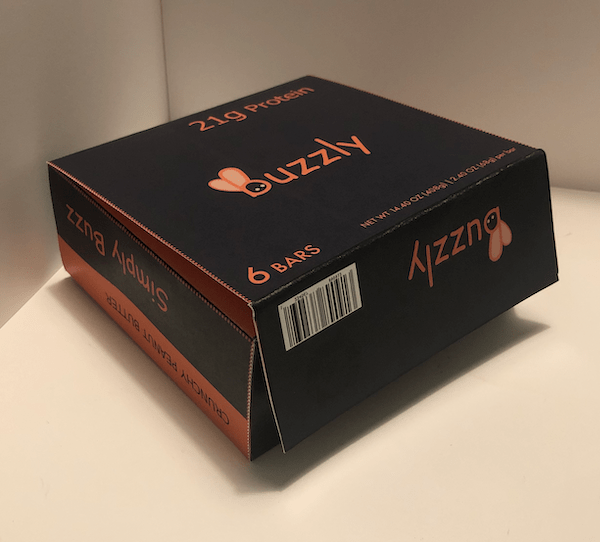
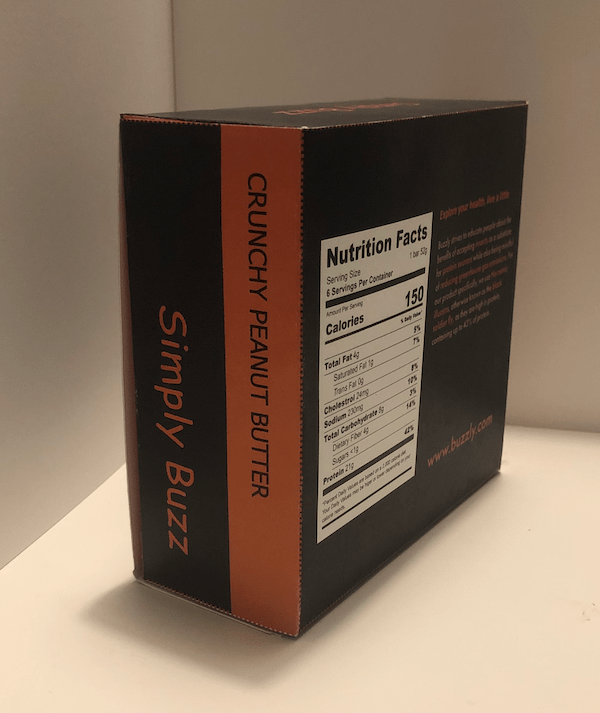
Ladybugs enable the concealing of their wings not only because the strong wings are collapsible, but also because of how it folds their wings. They use a clever mechanism of gathering the wings towards the middle and thus folding them into the case. I applied biomimicry in the flaps that keep the sides of the protein box together. The slits on each side allow for an intertwining of flaps that are sturdy yet easy to unfold. The package would be made out of recycled paper, which would be biodegradable.
Dielines
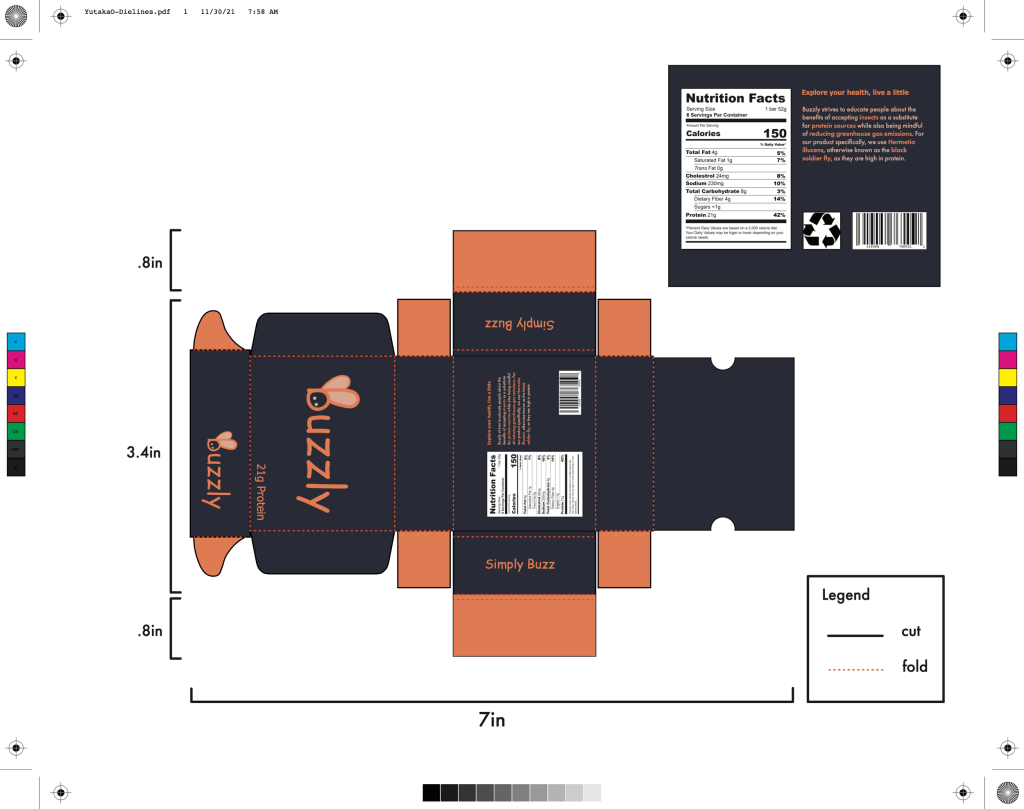
Dielines are used to design for printing and provide instructions for the packaging. While what is seen on the right is the ideal dieline on appropriately sized paper, if necessary, the dieline can be cut into two pieces to accommodate for smaller paper.
 Yutaka Ozeki